Frozen and refrigerated brands often reach a point where retail growth creates a freight problem. Orders become more frequent, delivery windows become tighter, and customers expect consistent replenishment, but not every shipment is large enough to justify a full truckload.
That is where retail LTL consolidation can help.
LTL stands for less-than-truckload. In cold chain distribution, retail LTL consolidation brings compatible frozen or refrigerated shipments together in a planned, temperature-controlled freight program. Instead of managing every smaller order as a separate transportation challenge, food brands can move partial loads more efficiently while still supporting retailer delivery requirements.
For brands shipping into retail distribution centers, the goal is not only to reduce freight complexity. The goal is to meet delivery windows, protect product quality, improve cold chain shipment visibility, and keep replenishment moving without increasing risk.
What Retail LTL Consolidation Means in the Cold Chain
Consolidating cold chain retail shipments means grouping compatible shipments into planned loads that move toward similar retail DCs, regions, or distribution networks. These may include frozen, refrigerated, or temperature-sensitive products that can move together under the right handling, routing, and temperature requirements.
Cold chain consolidation is more complex than dry freight consolidation. Product compatibility matters. Temperature zones matter. Dock timing, pallet condition, dwell time, route planning, appointment scheduling, and receiving requirements all affect whether the shipment performs as expected.
The value is not simply putting multiple shipments on one trailer. The value comes from coordinating those shipments through a controlled cold chain process. When consolidation is managed correctly, food brands can move smaller orders with more structure, better visibility, and less reliance on one-off freight decisions.
Why Frozen and Refrigerated Brands Struggle with Retail Delivery Windows
Retail delivery windows can be difficult for growing food brands because volume does not always match the retailer’s expectations. A brand may need to replenish multiple retail DCs every week, but some lanes may only require a few pallets at a time.
Waiting for full truckload volume can delay replenishment. Shipping every small order separately can increase cost, add handling variables, and make delivery performance harder to manage. Traditional LTL may not always provide the temperature control, appointment discipline, or visibility required for frozen and refrigerated products.
This creates pressure across the cold chain. The brand needs to ship often enough to support retail inventory. The retailer expects on-time delivery. The product needs to remain protected. The transportation plan has to support all three.
Retail LTL consolidation gives food brands a more practical way to manage recurring smaller shipments without treating each order as an isolated freight event.
How Retail LTL Consolidation Supports On-Time Delivery
On-time delivery starts before the truck leaves the facility. Product has to be picked, staged, loaded, routed, and scheduled around retailer receiving requirements. When those steps are not aligned, even a good carrier relationship may not be enough to protect the delivery window.
Retail LTL consolidation supports on-time delivery by bringing more planning into the process. Consolidated freight can move on more predictable schedules, with better alignment between order readiness, outbound dock activity, route planning, and retail appointments.
For frozen and refrigerated brands, that structure matters. It reduces the need to scramble for last-minute LTL options, helps coordinate freight around retailer delivery requirements, and gives teams more visibility into shipment timing before a missed appointment becomes a scorecard issue.
How Consolidation Supports Fill Rate and Retail Replenishment
Fill rate depends on whether ordered product is available and fulfilled. But for retail brands, product availability is only part of the challenge. The product also has to move to the retail DC on the right cadence.
If a brand waits until it has full truckload volume, retail replenishment may slow down. If it ships small orders separately, freight cost and coordination issues can increase quickly. Retail LTL consolidation helps bridge that gap by allowing smaller replenishment quantities to move more often through a planned program.
This can be especially useful for brands expanding into new retail accounts or regional distribution centers. Early retail growth often creates uneven demand by lane, customer, or SKU. Consolidation gives brands a way to keep product moving without over-shipping, delaying replenishment, or relying on emergency freight.
Temperature-Controlled LTL Risks Consolidation Must Manage
Retail LTL consolidation only works when cold chain discipline is built into the process. Combining freight without the right controls can create new risks.
Frozen and refrigerated shipments must be grouped carefully. Product compatibility, temperature zone requirements, pallet stability, loading sequence, dwell time, cross-dock exposure, documentation, and chain-of-custody all need attention.
The provider also needs to understand retail receiving requirements. A shipment can be planned well from a freight perspective but still create problems if delivery appointments, labeling, pallet condition, or documentation do not meet the retailer’s expectations.
For cold chain products, consolidation should never mean losing control. It should mean creating a more coordinated path for compatible freight to move through the network with better planning and fewer avoidable handoffs.
When Retail LTL Consolidation Makes Sense
Retail LTL consolidation can be a strong fit for frozen and refrigerated brands that have recurring shipments but not full truckload volume on every lane. It may also support brands entering new retail markets, managing regional replenishment, or trying to reduce the cost and complexity of smaller cold chain shipments.
Common use cases include a frozen brand shipping several pallets weekly into retail DCs, a refrigerated manufacturer expanding into new regions, or a food distributor managing frequent but uneven replenishment orders across multiple customers.
A practical way to evaluate the opportunity is to look at shipment pattern, not just shipment size. If smaller orders are recurring, moving toward similar destinations, and tied to strict retail delivery windows, consolidation may offer a more consistent cold chain transportation model than managing each shipment separately.
Retail LTL Consolidation vs. Standalone LTL
A simple comparison can help show where consolidation may create value.
| Area | Standalone LTL | Retail LTL consolidation |
| Shipment planning | Often handled shipment by shipment | Planned around recurring retail movement |
| Freight efficiency | Smaller loads may move separately | Compatible freight is grouped |
| Delivery windows | More dependent on individual carrier options | Better alignment with appointment planning |
| Cold chain control | More handling and visibility variables | Managed through a coordinated process |
| Best fit | One-off or occasional shipments | Recurring retail replenishment lanes |
This does not mean retail LTL consolidation is the right answer for every shipment. Full truckload still makes sense when volume, lane density, and delivery requirements support it. Standalone LTL may work for certain occasional moves. The value of consolidation is strongest when brands need frequent, smaller, temperature-controlled shipments moving through repeatable retail lanes.
What to Ask Before Choosing a Retail LTL Consolidation Partner
A consolidation partner should understand more than freight rates. They should understand cold chain operations, retail delivery requirements, temperature control, and the handoffs between storage and transportation.
Before choosing a partner, food brands should ask how compatible products are grouped, whether consolidation points are temperature controlled, how dwell time is managed, and how delivery appointments are coordinated. They should also ask what shipment and temperature visibility is available, how delays are escalated, and how volume spikes are handled.
The most important question is whether consolidation is connected to the broader cold chain operation. When storage, inventory visibility, order readiness, freight planning, and customer communication are aligned, food brands are in a stronger position to meet retail delivery windows without adding unnecessary product risk.
Improve Retail Delivery Windows with Connected Cold Chain Execution
Retail LTL consolidation helps frozen and refrigerated brands solve a practical retail distribution challenge: how to move smaller replenishment orders more consistently without sacrificing temperature control, visibility, or delivery performance.
For food brands shipping into retail DCs, consolidation works best when it is connected to cold storage, order readiness, freight planning, appointment coordination, and customer communication. The benefit is not only lower transportation complexity. The benefit is a more coordinated cold chain process that supports product quality and retail execution at the same time.
As retail programs grow, delivery performance becomes harder to manage through disconnected freight decisions. Consolidating retail LTL gives frozen and refrigerated brands a more structured way to support replenishment, reduce avoidable handoffs, and meet delivery windows with greater consistency.
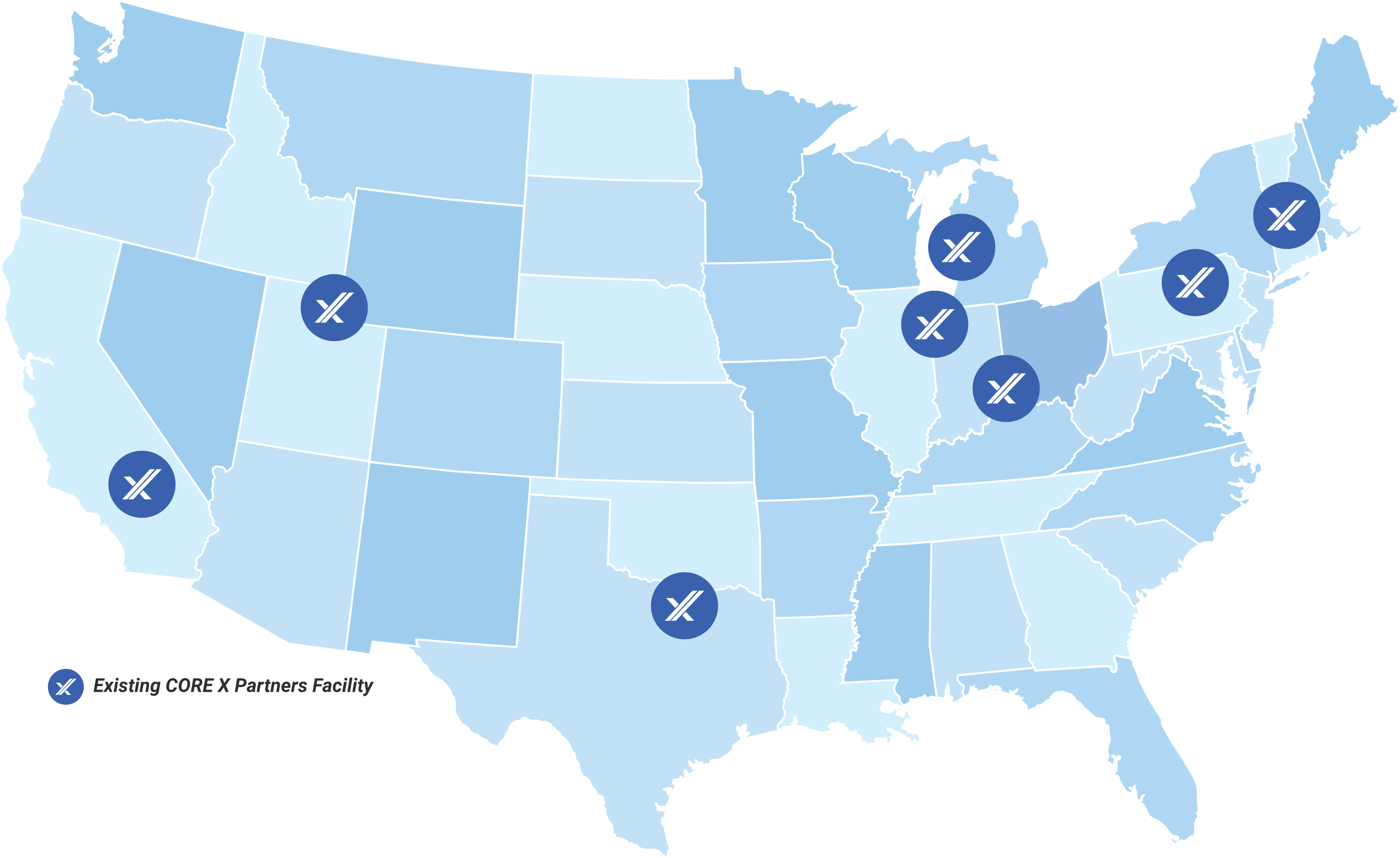
CORE X Partners helps food companies protect temperature-sensitive products through a nationwide cold chain network built for storage, transportation, logistics, and distribution. With experienced regional operators, cold chain visibility, retail LTL consolidation, and coordinated freight support, CORE X helps customers reduce avoidable handoffs and meet retail delivery requirements with greater consistency. Contact CORE X Partners to learn how our integrated cold chain solutions can support frozen and refrigerated products moving through regional and national retail distribution networks.